Localization Project Management
Planning and coordinating localization work across stakeholders, linguists, vendors, and internal teams — with a focus on clear communication, realistic timelines, risk management, and reliable delivery.
As a Localization Project Manager and Operations Specialist, I help global teams deliver multilingual content through reliable localization workflows, strong language quality, and the practical use of technology and AI.
My background as a Localization Project Manager combines project coordination, localization operations, language quality, and technology. This allows me to look beyond individual tasks and focus on how people, processes, and tools work together to deliver reliable multilingual content.
Planning and coordinating localization work across stakeholders, linguists, vendors, and internal teams — with a focus on clear communication, realistic timelines, risk management, and reliable delivery.
Improving workflows, localization assets, TMS processes, handoffs, and quality controls to reduce unnecessary manual work and make multilingual delivery easier to manage and scale.
Linguistic QA, terminology management, translation review, MTPE, and quality frameworks focused on consistency, usability, accuracy, and the expectations of the target market.
Practical use of CAT and TMS platforms, AI-assisted quality evaluation, machine translation, analytics, and Python-based automation to support better localization decisions and workflows.
The common thread: making localization easier to operate, easier to scale, and easier for teams to trust.
I work across localization platforms, project management systems, quality tools, and automation technologies. The tool itself is rarely the goal — what matters is using the right technology to support reliable workflows, clear collaboration, and better localization decisions.
Technology should support the workflow, not complicate it. I focus on choosing and improving tools based on the problem they solve, the people who need to use them, and the value they add to localization delivery.
My experience as a Localization Project Manager spans enterprise localization, independent consulting, project coordination, business operations, and technical systems. That mix helps me approach localization not only as a language process, but as an operational system involving people, technology, quality, and delivery.
Combined German language leadership, localization operations, and project support across global programs for cloud, AI, enterprise software, marketing, web, and technical content.
Independent localization consulting focused on localization operations, German language services, language quality, AI-assisted localization, workflow optimization, and technical content for international organizations.
Managed independent localization and translation projects for international clients across software, manufacturing, outdoor, engineering, IT, and technical content. Work included project coordination, German localization, terminology management, translation review, and client communication.
Managed day-to-day operations across hospitality and technical diving businesses, including scheduling, workforce coordination, customer communication, logistics, systems, marketing, regulatory requirements, and multilingual service delivery.
Built an early technical foundation across network administration, IT infrastructure, electrical systems, mechanics, electronics, hydraulics, and industrial environments. The experience developed the systems thinking and troubleshooting approach I now apply to localization technology and workflow design.
Different industries, but a consistent theme: coordinate people and processes, understand the technology behind the work, solve problems early, and build reliable ways to deliver.
See Selected Projects →Practical projects focused on localization quality, workflow reliability, translation memory management, and AI-assisted quality evaluation. Each addresses a recurring operational challenge in multilingual content delivery.
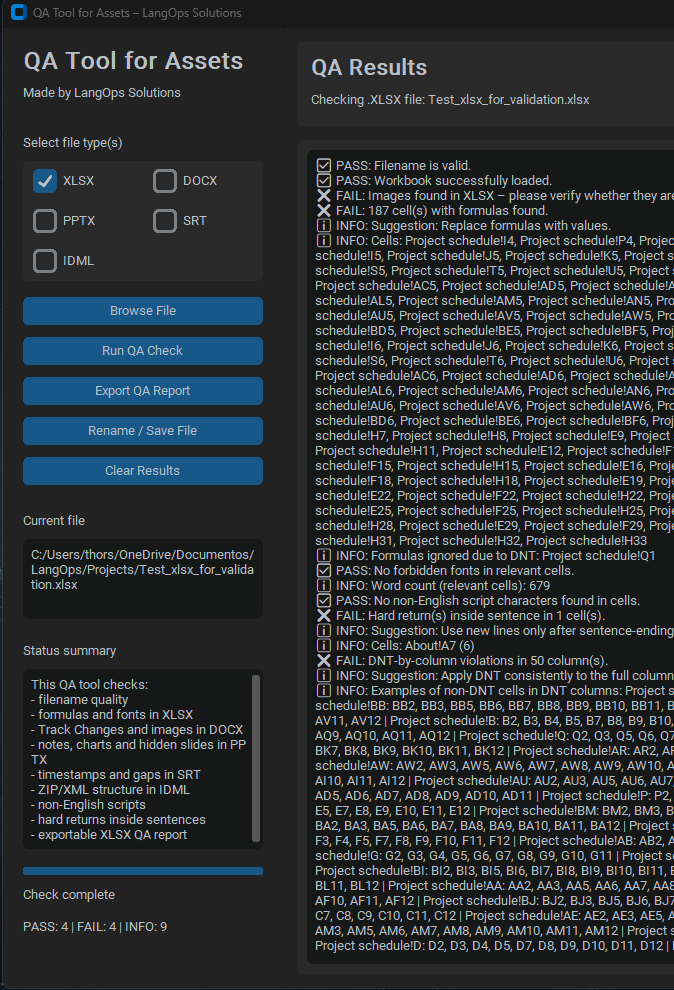
A structured validation framework designed to detect localization file issues before content enters the translation workflow.
Localization assets can contain hidden formatting, structural, placeholder, or language issues that create problems later in the workflow.
Built a validation workflow that checks common localization file types for structural integrity, formatting issues, broken placeholders, hidden content, and non-target language text.
Helps identify problems earlier, reducing downstream QA effort and improving localization asset readiness.
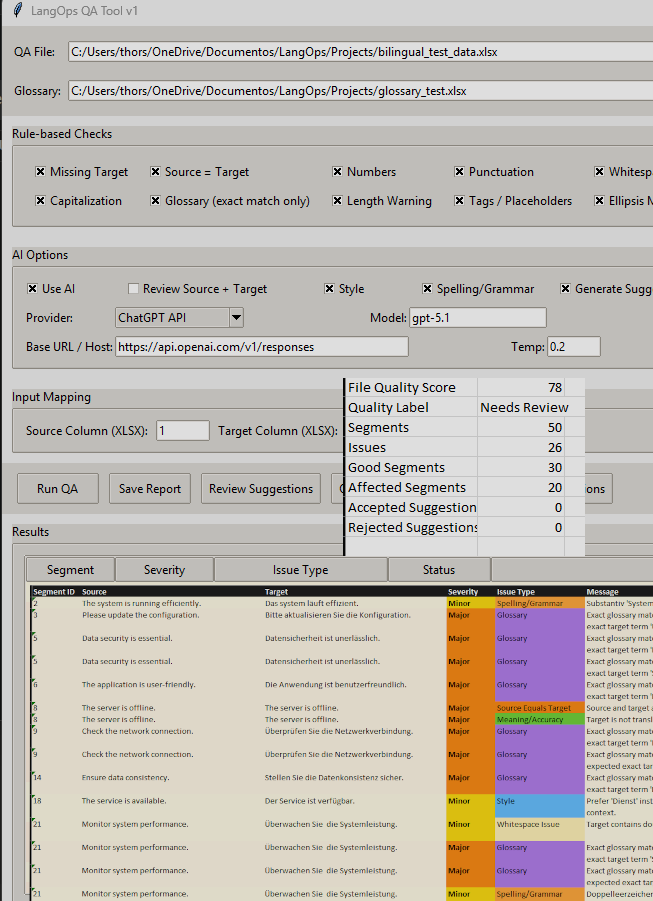
A hybrid localization QA framework combining deterministic checks with AI-assisted linguistic evaluation.
Traditional QA tools are effective at detecting mechanical issues but may miss fluency, context, terminology, and overall translation quality.
Combined rule-based validation with AI-assisted linguistic analysis to evaluate terminology, missing translations, formatting, grammar, fluency, and translation accuracy.
Supports more consistent quality evaluation and provides reviewers with structured findings that help prioritize human review.
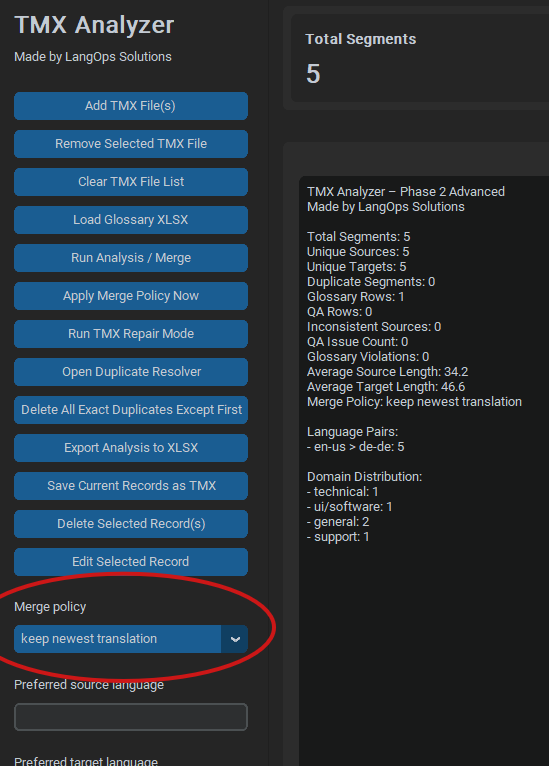
A TMX analysis framework that turns translation memories into structured datasets for quality analysis, cleanup, and reuse.
Translation memories accumulate duplicates, inconsistencies, outdated terminology, and other issues that can reduce leverage and long-term value.
Built a TMX parsing and analysis workflow for detecting duplicates, language inconsistencies, terminology issues, and quality patterns while supporting filtering, merging, and cleanup.
Supports cleaner translation memories, more reliable reuse, stronger terminology consistency, and better localization asset governance.
The common goal: move quality checks earlier in the localization process, make useful data visible, and reduce avoidable manual work.
See How I Work →Good localization is rarely the result of one tool or one final quality check. I prefer to understand the full workflow, identify where problems originate, and improve the process in ways that make delivery more reliable for everyone involved.
Before changing a process, I look at how the work actually moves: stakeholders, source content, localization assets, tools, handoffs, dependencies, deadlines, and quality expectations. The goal is to find the real source of friction rather than optimize one isolated step.
Quality should start before translation. Clear terminology, validated files, reliable translation memories, defined ownership, and appropriate QA checks reduce avoidable issues and make final review more effective.
Automation and AI are most useful when they remove repetitive work, surface useful information, and help people make better decisions. Linguistic judgment, context, and market understanding still require the right human expertise.
A good process should be understandable, documented, scalable, and practical for the teams using it. I focus on clear handoffs, useful reporting, realistic controls, and workflows that continue to work when volume grows.
“Quality is not checked— it’s engineered.”
The best localization workflows prevent predictable problems early, give teams the information they need, and reserve human attention for the decisions where it adds the most value.
Feedback from leaders and colleagues I worked with at Oracle, reflecting my contribution across localization operations, language quality, workflows, technology, and collaboration.
I had the pleasure of working with Marco at Oracle, where he played a key role in our localization efforts as a German Translation Specialist, German Team Lead, and Tools, Systems, and Workflow Support for our in-house translation team.
Marco was instrumental in supporting the Marketing In-House Translation team and our vendor network, helping ensure smooth operations across tools, workflows, and systems.
I had the pleasure of working with Marco, and I would say he is a great asset to any localization team.
He has a strong command of the subject matter across a wide range of projects and consistently delivers high-quality work with exceptional attention to detail. Beyond his core translation expertise, what truly sets him apart is his strength in technical and workflow support.
I worked with Marco for several years on enterprise translation solutions for marketing content, covering workflow optimization, tool development, translation asset maintenance, automation, and the use of GenAI.
Marco has an impressive skill set rooted in extensive first-hand experience in language operations and localization. He has a keen eye for complex solutions and communicates requirements and feedback in a concise and effective manner.
Different perspectives, one consistent theme: reliable localization work, practical technical support, and a focus on making workflows work better for the people using them.
View LinkedIn Profile →Localization is where language, technology, people, and processes meet — which is probably why it has always felt like a natural fit for me.
My career did not start in localization. I first worked in engineering and IT, where I learned to understand systems, troubleshoot problems, and look for practical ways to make processes work better.
Later, managing businesses and operational teams added another perspective: schedules, logistics, customer expectations, service delivery, communication, and the reality that even a good process only works when people can actually use it.
Localization brought those experiences together. Over time, my work expanded from German translation into localization project management, language quality, workflow support, localization operations, automation, and AI-assisted processes.
That background still influences how I work today. I enjoy understanding the full picture, finding the point where a workflow becomes unnecessarily difficult, and helping teams make it simpler and more reliable.
I am most comfortable where language expertise, project coordination, technology, and operational problem-solving overlap.
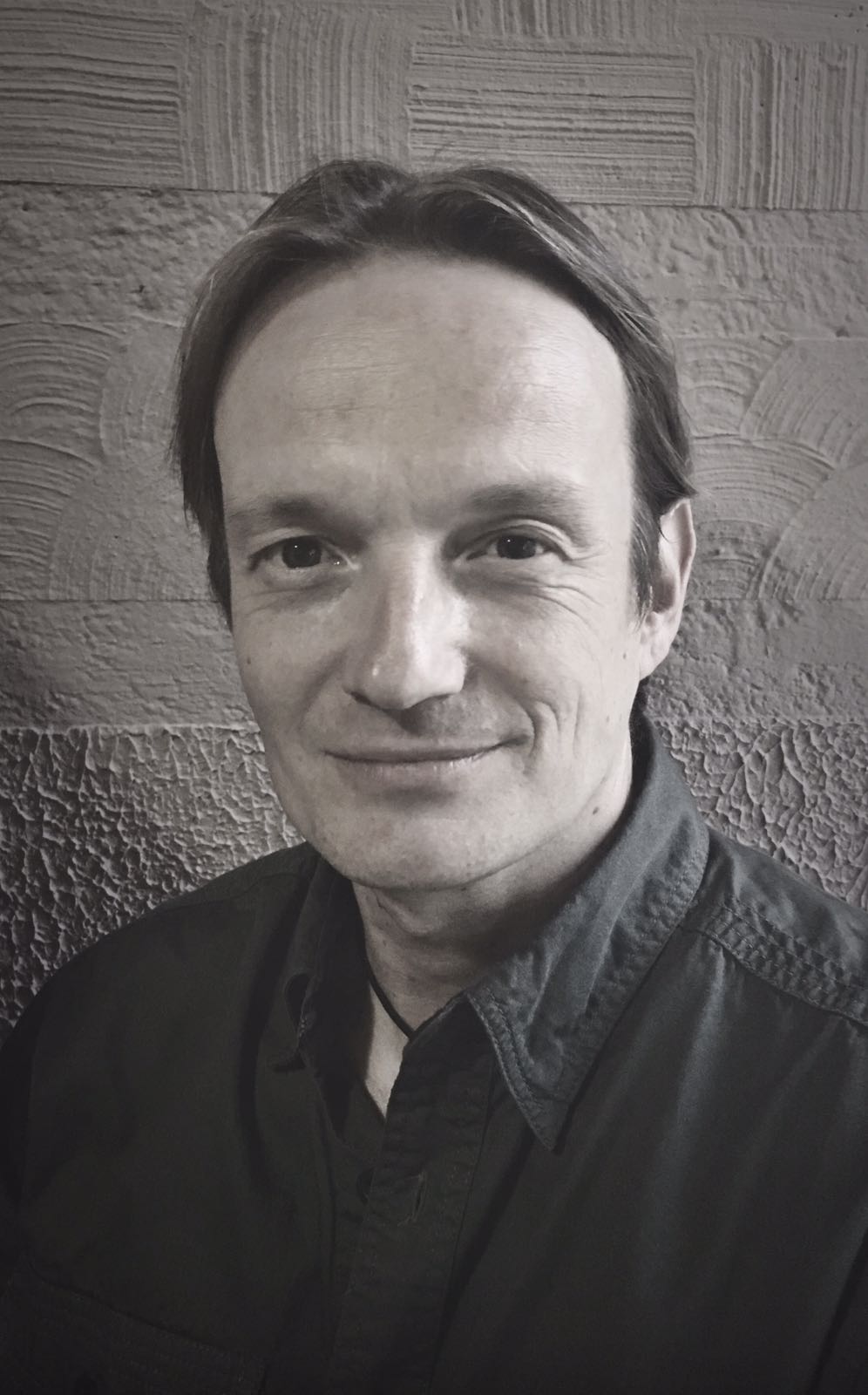
Clear communication, useful processes, realistic automation, and quality standards that help teams rather than create more work for them.
I am currently open to remote opportunities where I can contribute across localization project management, operations, language quality, and localization technology.
Let’s Connect →I am open to remote Localization Project Manager opportunities as well as roles in localization operations, language quality, and localization technology. If my background could be a good fit for your team, feel free to connect with me on LinkedIn.